

A genuine redundancy is not an unfair dismissal, but a redundancy that fails the test in section 389 of the Fair Work Act can be challenged at the Fair Work Commission. You generally have 21 calendar days to lodge. Check your qualifying period now, and start collecting dated evidence of consultation and any redeployment offers.
TL;DR:
- Keep dated records of operational changes, consultation, and vacancies; reasonable redeployment, including within an associated entity, can undermine a genuine redundancy.
- Unfair dismissal claims generally require six months of service at employers with 15 or more staff, or one year at small businesses.
- Casual employees need regular, systematic work and a reasonable expectation of ongoing employment; employees without award or agreement coverage face the $190,100 high income threshold.
- Lodge within 21 calendar days of the dismissal taking effect; the $87.20 application fee can be waived for financial hardship.
- Redundancy pay generally excludes casuals, employees with under 12 months’ continuous service, fixed term trainees or apprentices, and people dismissed for serious misconduct.
Table of Contents
- What redundancy and dismissal mean in Australian law
- How does the genuine redundancy test work?
- Who can make an unfair dismissal claim, and by when?
- What redundancy pay and notice are you owed?
- Which situations cause the most confusion?
- What should you do in the first 21 days?
- Why does acting quickly matter so much?
- How we can help you prepare
- FAQ
- Sources
What redundancy and dismissal mean in Australian law
Dismissal, or termination, simply means your employer ended your employment. Redundancy is one reason an employer can give for doing that. The Fair Work Ombudsman explains that a redundancy arises when your employer no longer needs your job done by anyone, or becomes insolvent.
So redundancy is not the opposite of dismissal. It sits inside it. The practical difference is the legal test that follows:
- Dismissal for another reason (performance, conduct): the Commission asks whether it was harsh, unjust or unreasonable.
- Redundancy: the Commission first asks whether it was genuine. If it was, it has no power to hear an unfair dismissal claim.
- Retrenchment: an everyday word for redundancy, with the same legal meaning.
The Fair Work Commission and the Fair Work Ombudsman are the two primary sources for guidance, and we link both at the end of this article.
How does the genuine redundancy test work?
Section 389 has two parts. Your job must no longer be needed by anyone because of changes to the employer's operational requirements, such as a restructure, new technology or a downturn. And the employer must have followed any consultation requirements in an applicable award or enterprise agreement. Our guide to genuine redundancy evidence shows how this plays out in practice.
Redeployment matters too. If your employer could reasonably have moved you into another role, including at an associated entity, the redundancy may not be genuine. Watch for these red flags:
- The same role is advertised, or someone is hired to do your duties, soon after you leave.
- You were told of the decision without any discussion.
- No one raised alternative roles, retraining or reduced hours.
- Your award or agreement sets consultation steps that were skipped.
The Commission's redeployment guidance notes that employers sometimes treat any restructure as an automatic genuine redundancy. It is not.
Pro Tip: Screenshot any vacancy ad for a similar role, with the date visible, before it is taken down.
Who can make an unfair dismissal claim, and by when?
You must have served a minimum employment period, according to the Commission's unfair dismissal page. Our explainer on the minimum employment period covers the detail.
- Six months if your employer has 15 or more employees.
- One year for small businesses with fewer than 15 employees, counting associated entities.
- Casuals qualify if they worked regularly and systematically with a reasonable expectation of ongoing work. See our casual employee guide.
- High earners not covered by an award or agreement face a threshold of $190,100.
- Deadline: 21 calendar days from the day the dismissal took effect. The application fee is $87.20, and it can be waived for financial hardship.
Late applications are allowed only in exceptional circumstances, so do not plan around them. Our eligibility checklist walks through each step.
What redundancy pay and notice are you owed?
Under the National Employment Standards, most eligible employees receive redundancy pay based on continuous service. Check whether your award or enterprise agreement provides additional entitlements.
- Notice: check the terms of your employment and the applicable workplace rules to find out what notice may apply.
- Redundancy pay: the Fair Work Ombudsman sets out what may apply on its redundancy page.
- Who misses out: under the Fair Work Ombudsman's list, employees with under 12 months' continuous service, casuals, trainees or apprentices engaged for a set period, and employees dismissed for serious misconduct do not get redundancy pay.
If your payout looks short, our guide to redundancy pay disputes explains how to challenge it.
Which situations cause the most confusion?
These scenarios come up most, and each changes the analysis:
- Forced resignation: if you believe your employer pressured you to resign, get advice about whether the circumstances could amount to a dismissal. Keep relevant messages.
- Sick leave: according to the Fair Work Ombudsman, you are protected in many cases while using paid sick leave or during short absences, and protection weakens after extended unpaid absence. An employer can still dismiss for another valid reason, as this practitioner article explains.
- Probation: eligibility depends on whether you have met the minimum employment period.
- Performance and misconduct: the Commission looks at whether there was a valid reason, whether you could respond, and whether you had prior warnings. Serious misconduct is a higher bar and affects redundancy pay.
- Small business: eligibility rules differ for employees of small businesses. Check the Commission's unfair dismissal guidance for the applicable minimum employment period.
What should you do in the first 21 days?
Move in this order:
- Confirm your qualifying period, whether an award or agreement covers you, and whether the high-income threshold applies.
- Gather evidence: dated consultation emails, your position description, vacancy ads, pay records and notice letters.
- Lodge with the Fair Work Commission within 21 calendar days, and ask for a fee waiver if you need one.
- Prepare for conciliation. A settlement may include compensation, and the Commission can order reinstatement if the dismissal is found unfair.
The application fee is $87.20, and it can be waived for financial hardship, so cost should not stop you lodging on time.
Why does acting quickly matter so much?

In my view, the 21-day deadline is the single most underrated fact in this area. People spend weeks hoping for a better offer or debating fairness, then discover the window has closed. The Commission can hear a late application only in exceptional circumstances, and delay is rarely accepted as one.
Timestamp and back up every consultation record, vacancy ad and message from day one. Organised paperwork also strengthens your position at conciliation.
— Nicolas
How we can help you prepare
If you are weighing up a redundancy or dismissal claim, our preparation support is built around Australian Fair Work rules. Here is what we offer:
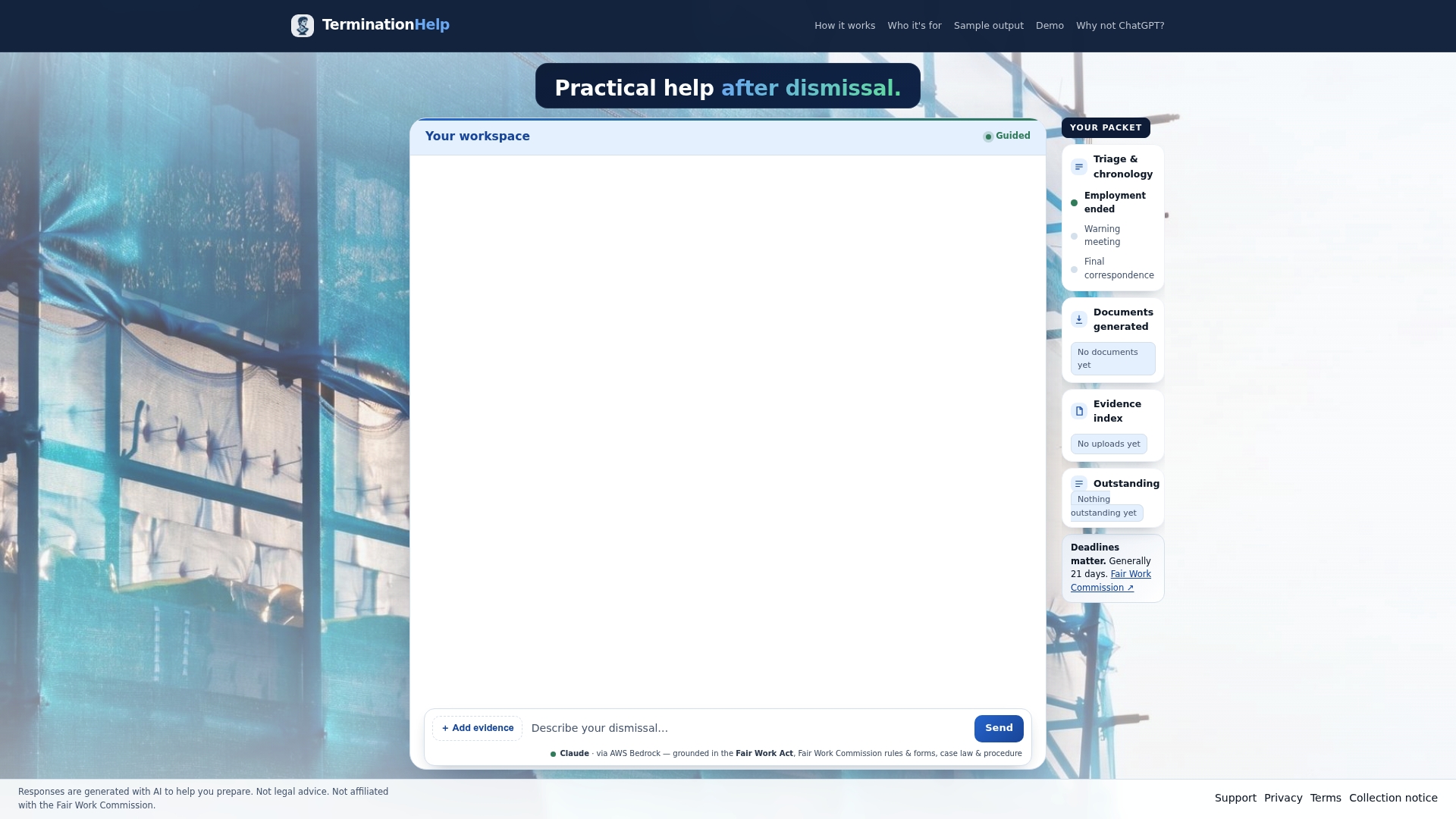
- An eligibility check covering your qualifying period and deadline.
- An evidence organiser for emails, notices and pay records.
- Automated generation of the Fair Work forms you need.
You can file the result yourself or take it to a lawyer, union or community legal centre. Start on our preparation page and get your documents ready before the 21 days run out.
This article is general information, not a substitute for advice from a qualified lawyer. Consult a qualified legal professional about your own circumstances before acting on anything here.
FAQ
What are redundancy benefits in Australia?
Most eligible employees are entitled to redundancy pay under the National Employment Standards, based on continuous service. Casuals, employees with under 12 months' service and those dismissed for serious misconduct generally miss out, as the Fair Work Ombudsman states.
Can you be dismissed during redundancy?
Yes. Redundancy is itself a form of dismissal. If it is not genuine, for example because the job still exists or redeployment was reasonable, you may be able to claim unfair dismissal within 21 days.
What is the difference between redundancy and retrenchment?
In everyday Australian usage they mean the same thing: your employer no longer needs your job done. The legal test is the same genuine redundancy test under section 389.
What are the legal requirements for dismissal in Australia?
Check your employment terms and the applicable workplace rules to find out what notice and other entitlements may apply. If the dismissal is not a genuine redundancy, the Commission considers whether it was harsh, unjust or unreasonable, including the reason and whether you could respond, as the Fair Work Ombudsman outlines.
Sources
Recommended
- Check Unfair Dismissal Eligibility in Australia: 21 days to lodge
- Genuine redundancy: evidence for an Australian unfair dismissal claim
- Constructive dismissal in Australia: lodge within 21 days
- 21 days after a whistleblower dismissal in Australia: case law, steps
Article produced using AI. This is not legal advice.