

Without prejudice privilege protects genuine settlement communications from being used as evidence, but only when the communication is a real attempt to negotiate a dispute, not just because someone wrote the words at the top of a letter. Writing "without prejudice" on a routine complaint or performance email does not create protection. Because exceptions and waiver can strip that protection away, get advice before you share settlement material widely.
TL;DR:
- Without prejudice protection requires genuine negotiation attempts related to an existing or anticipated dispute, not just any mention of "without prejudice" or routine correspondence.
- Verbal settlement terms discussed during Fair Work Commission conciliation are protected only if recorded properly in a signed settlement deed or consent order before considering the dispute resolved.
- Sharing settlement communications with third parties, or relying on them in court, can waive privilege unless the disclosure is strictly limited to necessary legal procedures, like costs disputes.
- Clarifying whether a communication is protected involves assessing its substance, not just its label, with courts examining the context of the negotiation and the intention expressed.
- Protect your settlement efforts by labeling genuinely confidential offers "without prejudice," restricting circulation, and keeping privileged drafts separate from evidence files.
Table of Contents
- Definition and legal basis of without prejudice privilege in Australia
- When 'without prejudice' applies in workplace and Fair Work settings
- Exceptions and waiver: when without prejudice material can be admitted
- Practical steps: how to use 'without prejudice' safely when negotiating a workplace settlement
- Managing disclosure, electronic records and remedies after accidental disclosure
- Practitioner perspective: balancing settlement talk with litigation risk
- How TerminationHelp can support Fair Work settlement preparation and claim filing
- Sources
- FAQ
Definition and legal basis of without prejudice privilege in Australia
Without prejudice privilege is a rule of evidence, not a magic phrase. It shields communications genuinely made to negotiate a settlement of a dispute from being tendered later in court or in a tribunal. The label on the page is evidence of intention, but courts look at the substance and context of the communication, not just the heading.
The doctrine developed to serve a clear policy goal: parties should feel free to make frank offers and concessions without those admissions being used against them if talks break down. Australian courts have repeatedly tied the privilege to genuine attempts at settlement. In KC & Ors v Shiley Inc & Anor, the Federal Court confirmed that protection arises from communications between parties in dispute made in connection with an attempt to negotiate settlement, not from any communication that happens to carry the phrase.
The Fair Work Ombudsman's dispute resolution guidance reinforces the practical side of this: conciliators provide information and help facilitate discussion, but they do not decide the case, and parties still need to prepare their own admissible evidence.
Three things determine whether a communication is protected:
- It must relate to an existing or anticipated dispute, not general workplace correspondence.
- It must genuinely attempt to negotiate a resolution, not simply record a position.
- Its substance, read in context, must show a settlement purpose, regardless of any label used.
When 'without prejudice' applies in workplace and Fair Work settings
Fair Work Commission conciliation is voluntary and informal, and the conciliator's job is to help both sides find common ground, not to decide who is right. That distinction matters because anything said purely to explore settlement during conciliation generally attracts without prejudice protection, while facts stated outside that context do not.
Because conciliators are not decision makers, whatever gets discussed in conciliation does not automatically bind either side unless it is recorded properly. This is where many employees trip up: a verbal understanding reached in conciliation is not enforceable until it is captured in a signed settlement deed or a consent order.
- Ask for any agreed outcome to be put into a written settlement deed or consent order before you treat the matter as resolved.
- Keep a personal note of what was discussed and offered, separate from any privileged draft documents.
- Do not assume ongoing settlement talks pause your legal deadlines, including the 21-day unfair dismissal filing window.
Negotiating in good faith is sensible, but it never substitutes for protecting your procedural rights. File on time, then negotiate.
Exceptions and waiver: when without prejudice material can be admitted
Without prejudice protection is conditional, not absolute, and several recognised situations strip it away.
- Waiver by inconsistent use: if a party refers to the substance of a without prejudice discussion in later proceedings, or relies on it for another purpose, a court can treat the protection as waived.
- Voluntary disclosure: sharing the communication with someone outside the negotiation, such as forwarding an offer to a third party or attaching it to open pleadings, risks losing protection entirely.
- Fraud or serious misconduct: courts have admitted otherwise protected material where it is needed to expose fraud or perjury.
- Costs disputes: a "without prejudice save as to costs" or Calderbank-style offer is designed to be shown to a court after judgment, specifically on the question of who pays costs.
Courts weigh fairness and inconsistency, not just the label, when deciding whether privilege has been lost. The High Court's approach to disclosure and waiver treats privilege as an immunity from compulsory disclosure that can be undone by inconsistent conduct.
Practical steps: how to use 'without prejudice' safely when negotiating a workplace settlement
Protecting privilege comes down to discipline in how you draft, label and circulate material.
- Mark genuine settlement offers "without prejudice" at the top and confine the content to negotiation terms, not factual disputes you want on the record elsewhere.
- Send offers only to the other party or their authorised representative, never copy colleagues, managers, or unrelated third parties.
- Keep privileged drafts in a separate file from your working documents and evidence file.
- Use "without prejudice save as to costs" wording when you want the offer to be admissible later on a costs argument, commonly called a Calderbank offer.
- Talk to a lawyer, union, or a preparation support service before disclosing settlement material broadly, especially once a matter is heading towards a Fair Work hearing.
Pro Tip: Treat every settlement draft as if a tribunal member might read it eventually: keep the language about resolution terms, and leave your factual case out of it.
A short settlement-document checklist helps: confirm the offer is genuinely about resolving the dispute, confirm recipients are limited to the other party, confirm the file is stored separately from your evidence folder, and confirm any final agreement is captured in a signed deed or consent order.
Managing disclosure, electronic records and remedies after accidental disclosure
Email makes accidental disclosure easy: a reply-all, a forwarded thread, or a shared drive with the wrong permissions can expose privileged settlement material in seconds.
- Store privileged correspondence in a clearly named, access-restricted folder, separate from general case files.
- Limit who can view or forward settlement drafts, including within your own household or support network.
- If disclosure happens anyway, preserve the original communication and a record of how the exposure occurred rather than deleting anything.
- Notify a legal adviser immediately and consider whether a protective order or injunction is realistic in the circumstances.
Courts do not automatically restore privilege once it is lost. Remedies such as injunctions depend on the specific facts, including how the disclosure happened and whether it would be fair to allow the material to be used. Authorities touching on this tension, including material from the Glencore litigation before the High Court, show that relief is far from guaranteed once material is out.
Practitioner perspective: balancing settlement talk with litigation risk
Experienced advisers treat "without prejudice" as a starting position, not a guarantee, and they draft accordingly. When a matter looks likely to end in a signed resolution, most will push for a formal deed or consent order rather than relying on an exchange of emails, because tribunals and courts assess enforceability by what was actually agreed and recorded, not by what was intended.
Fair Work conciliation feels informal, but the paperwork discipline should not be. A red flag for many advisers is a settlement offer that mixes genuine negotiation terms with factual admissions about the dismissal itself: that mixing is exactly what invites a fight over waiver later.
The safest settlement offer says as little as possible about the facts and as much as possible about the resolution.
— Nicolas
How TerminationHelp can support Fair Work settlement preparation and claim filing
Getting the paperwork right before you sit down at conciliation matters as much as anything said in the room. TerminationHelp's preparation support service is built specifically around Australian Fair Work claims, using a curated library of legislation, forms and case law to help structure your material and keep your evidence separate from anything you send as a settlement offer.
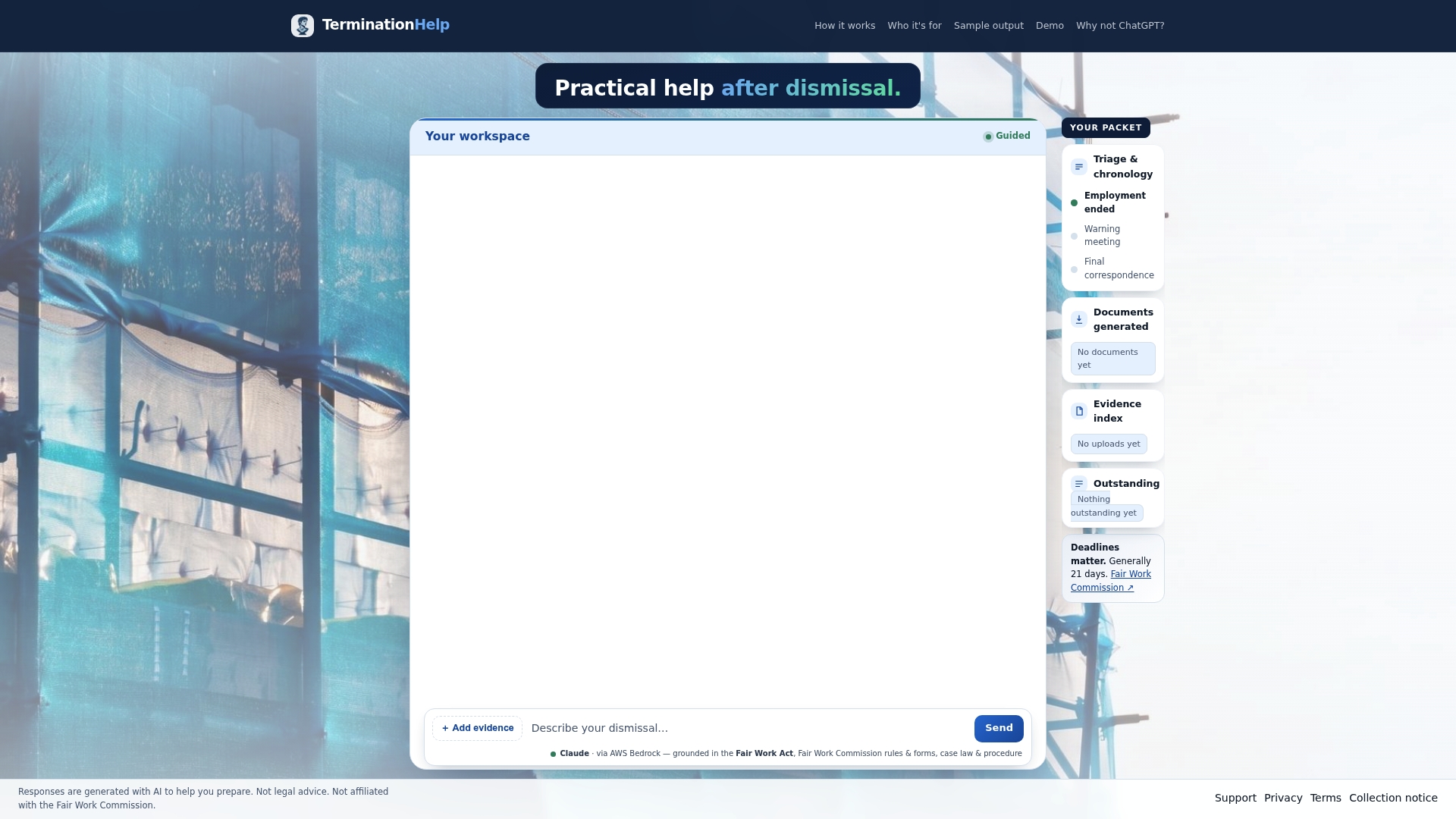
Such services suit anyone preparing a conciliation packet, organising evidence before making disclosures, or determining which Fair Work forms apply at each stage of a claim. They help generate documents in the needed order to keep privileged settlement drafts separate from case evidence. Readers wanting practical background on how work rights intersect with settlement outcomes can also see this guidance on work rights for further context.
Start by reviewing the Unfair Dismissal Preparation Australia landing page to see whether guided document preparation fits your situation.

This article is general information, not a substitute for advice from a qualified lawyer. Consult a qualified legal professional about your own circumstances before acting on anything here.
Sources
- Effective dispute resolution best practice guide - Fair Work Ombudsman
- High Court decision materials (referenced in Glencore case holdings)
FAQ
What does "without prejudice" mean in Australian law?
It means a communication was made genuinely to try to settle a dispute, and Australian courts generally will not allow that communication to be used as evidence against the person who made it. The protection depends on the substance of the communication, as confirmed in KC & Ors v Shiley, not simply on the label used.
What are the exceptions to without prejudice privilege in Australia?
Common exceptions include waiver through inconsistent use, voluntary disclosure to third parties, evidence needed to prove fraud, and costs disputes covered by a "without prejudice save as to costs" offer. Courts assess fairness and context rather than applying a fixed rule, as discussed in High Court authority on waiver.
What are common mistakes with without prejudice communications?
The most common mistake is assuming the label alone protects any content, including factual admissions about a dismissal. Another is forwarding a without prejudice offer to a third party or attaching it to open pleadings, which risks waiver.
Do Miranda rights exist in Australia?
No, Miranda rights are a United States concept and do not apply in Australia. Australian law provides different protections during police questioning and in civil disputes, and without prejudice privilege is a separate evidentiary rule that applies to settlement negotiations, not criminal cautions.
Does settling with my employer affect my unfair dismissal deadline?
No, settlement discussions do not pause or extend the statutory filing window. Protect your filing rights independently of any ongoing negotiation, as Fair Work Ombudsman guidance makes clear.
Recommended
Article produced using AI. This is not legal advice.