
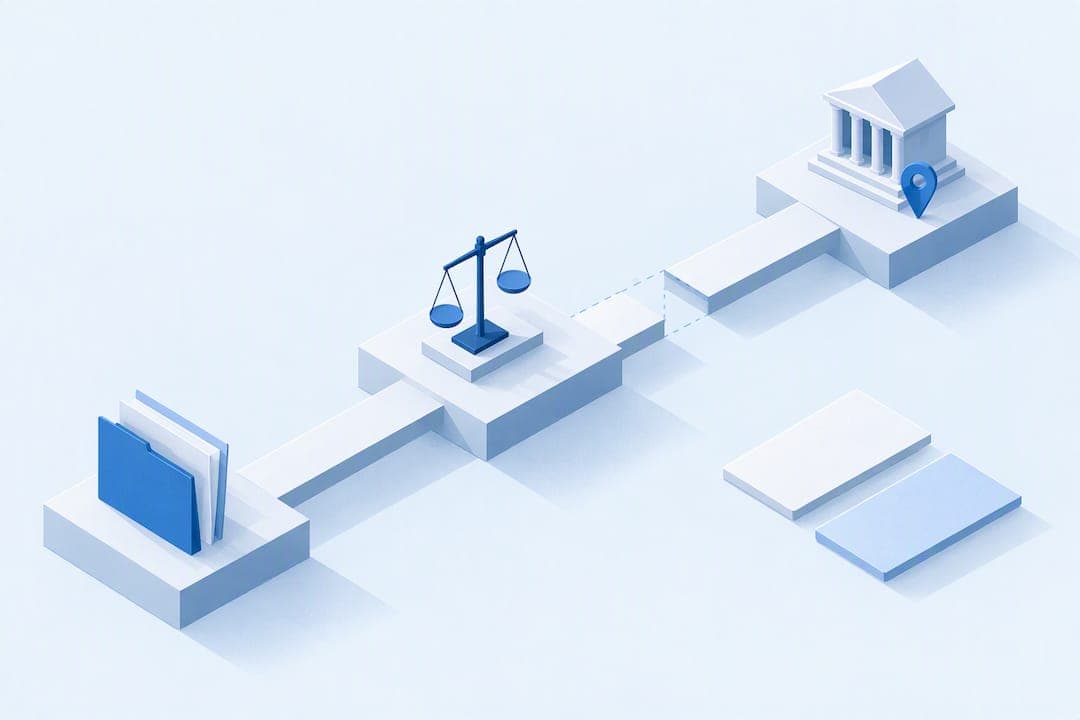
Dismissing someone because of a belief or suspicion that they made a qualifying disclosure can be unlawful under Part 9.4AAA of the Corporations Act. ASIC enforces that prohibition, the Fair Work Commission handles the employment fallout, and most dismissal applications must be lodged within 21 days.
TL;DR:
- Whistleblower protections apply to a broad range of connected individuals, including contractors and suppliers, as long as disclosures concern misconduct or legal breaches.
- Dismissal following a protected disclosure can be unlawful victimisation if there is evidence the decision was influenced by the employer's belief that the employee made a qualifying report, especially if timing links the two events.
- Evidence supporting a victimisation claim should focus on the decision-maker’s beliefs, timing of the disclosure, and documented inconsistencies, with the 21-day deadline for Fair Work claims being critical.
- Employers must carefully handle disclosures by maintaining confidentiality and separating investigation and employment decision processes to avoid discrimination claims.
- Building a well-organized, documented evidence timeline immediately after dismissal greatly improves chances of success in whistleblower-related disputes.
Table of Contents
- Who qualifies as a whistleblower and what counts as a protected disclosure
- When dismissal will be unlawful victimisation under the Corporations Act
- How causation and evidence work in these claims
- Unfair dismissal, general protections and timelines
- Remedies and enforcement: what you can get and what regulators can do
- Employer obligations and best-practice handling of disclosures
- Practical checklist for employees after dismissal or adverse action
- Common pitfalls and how preparation reduces risk
- What actually matters in a whistleblower dismissal claim
- How TerminationHelp supports whistleblower-related dismissal claims
- FAQ
- Sources
- Key primary sources and regulator pages
Who qualifies as a whistleblower and what counts as a protected disclosure
Whistleblower protection under the Corporations Act is not limited to full-time staff. The regime covers employees, officers, contractors, suppliers and their relatives or dependants, provided they have some connection to the regulated entity.
A disclosure only attracts protection when it meets certain conditions. It generally needs to concern misconduct, a contravention of the law, a danger to the public or the financial system, or conduct that amounts to an improper state of affairs within the company. Disclosures made to ASIC, APRA, certain Commonwealth authorities, the company's auditor or a nominated whistleblower officer can qualify, and in limited emergency or public interest circumstances, wider disclosure is permitted.
- Eligible reporters include current and former employees, officers, contractors and suppliers connected to the company.
- Qualifying disclosures typically involve suspected misconduct, breaches of financial services law or risks to public safety, not personal workplace grievances.
- Emergency and public interest disclosures allow broader reporting, including to journalists or parliamentarians, only after specific pre-conditions are met.
- Excluded matters generally include personal work-related grievances that have no broader public interest element, unless they also disclose a separate contravention.
The boundary between a protected disclosure and an ordinary commercial disagreement matters a great deal in practice. Raising a concern that the business is cutting corners on safety is different from disputing a manager's strategic call, even when both feel urgent to the person raising them. Employers and employees often disagree about which side of that line a particular complaint sits on, and that disagreement is frequently where disputes begin.
When dismissal will be unlawful victimisation under the Corporations Act
The Corporations Act prohibits causing or threatening detriment to a person because of a belief or suspicion that they have made, may make, or could make a disclosure that qualifies for protection. Detriment is defined broadly and ASIC's guidance lists dismissal, harassment, injury in employment, reputational damage and financial loss as examples.
- Dismissal is the most serious form of detriment and attracts the closest scrutiny from courts and the Commission.
- Harassment or bullying linked to a disclosure can itself support a victimisation claim, even without termination.
- Reputational or financial harm, such as being passed over for promotion or having a bonus withheld, also falls within the definition.
A breach of Part 9.4AAA can trigger both criminal and civil penalties, and ASIC's enforcement guidance confirms the regulator can investigate and pursue those penalties even though it cannot order compensation for the individual affected.
Recent authority has sharpened how courts assess these claims. The Full Federal Court's analysis in the Reiche v Neometals litigation confirmed that a victimisation claim requires the decision-maker to subjectively hold a belief or suspicion that the person made or might make a qualifying disclosure, and that this belief or suspicion must have been a substantial and operative factor in the decision to dismiss. A company cannot be found liable simply because a disclosure happened before a dismissal; the connection has to run through the actual state of mind of the person who made the call.
How causation and evidence work in these claims
The "substantial and operative factor" test sits at the heart of most whistleblower dismissal disputes, and it mirrors the causation standard used in general protections claims under the Fair Work Act. An applicant does not need to show the disclosure was the only reason for dismissal, only that it materially contributed to the decision alongside whatever other reasons the employer gives.
Evidence that tends to support an applicant's case includes emails or messages referencing the disclosure close in time to adverse action, meeting notes showing the employer's awareness of the complaint, unexplained changes in treatment after the disclosure was made, and inconsistencies between the reasons given for dismissal and the documented record.
- Timing between the disclosure and the adverse action is often the first thing a tribunal looks at.
- Paper trails, including performance reviews and HR file notes, either support or undermine the employer's stated reason.
- Decision-maker consistency matters: if the person who signed off on the dismissal gives shifting explanations, that cuts against the employer.
Employers commonly defend these claims by pointing to genuine redundancy, documented performance management that predates the disclosure, or misconduct unrelated to the complaint. The Clayton Utz commentary on the Neometals decision notes that separating the people who handle a disclosure from those who make employment decisions gives employers a stronger evidentiary position, because it is harder to argue the decision-maker knew about or was influenced by the complaint.
Pro Tip: Request copies of your performance file and any disciplinary correspondence as soon as a dispute looks likely, before access becomes harder to arrange.
Unfair dismissal, general protections and timelines
Employees facing dismissal after raising concerns usually have more than one legal avenue, and choosing the right one affects both the evidence needed and the deadline that applies.
- Unfair dismissal requires a minimum employment period, generally six months, or twelve months for a small business employer, and the Fair Work Ombudsman assesses whether there was a valid reason and whether the process was procedurally fair.
- General protections claims cover dismissal linked to a workplace right, complaint or protected attribute, and have no minimum service requirement, which makes them relevant where whistleblowing overlaps with a workplace complaint.
- Unlawful termination under the Corporations Act runs separately from the Fair Work regime and can be pursued through the courts where the dismissal relates to a disclosure covered by Part 9.4AAA.
Whichever employment claim applies, applications to the Fair Work Commission must generally be lodged within 21 days of dismissal, and extensions are only granted in limited circumstances, such as a genuine misunderstanding about when the dismissal took effect. Where the dismissal also involves a suspected breach of the whistleblower protections, a parallel complaint to ASIC or APRA can run alongside the Fair Work process, though court proceedings remain the route for seeking personal compensation under the Corporations Act.
Remedies and enforcement: what you can get and what regulators can do
The remedies available depend on which claim succeeds and where it is heard. Courts dealing with a Corporations Act victimisation claim can order compensation, make declarations and grant injunctions, and there is no statutory cap on the amount a court can award.
- Compensation is assessed on the loss actually caused by the victimisation, which can include lost income and, in some cases, damages for distress.
- Injunctions can stop ongoing detrimental conduct, such as an unlawful reassignment or a threatened dismissal.
- Declarations confirm that conduct breached the Act, which can support related proceedings or complaints.
ASIC can investigate suspected breaches of the whistleblower protections and pursue civil or criminal penalties against the company or individuals responsible, but it has no power to order compensation for the person affected. Anyone seeking personal compensation needs to bring their own court proceedings, separate from any regulatory action ASIC takes.
In practice, many matters start with conciliation at the Fair Work Commission on the employment side, run in parallel with a complaint to ASIC where the Corporations Act protections are engaged, and escalate to court only if conciliation and regulatory pressure do not resolve the dispute.
Employer obligations and best-practice handling of disclosures
Larger companies have had obligations to maintain a whistleblower policy since 1 January 2020, following reforms that also introduced civil penalties for breaches of the confidentiality and anti-victimisation rules. Employers must keep a whistleblower's identity confidential where required and avoid any action that could be seen as retaliation for a disclosure.
None of this stops an employer from managing genuine performance or conduct issues, including issues involving a person who has also made a disclosure, provided the actual motivation for the action is unrelated to the complaint.
- Confidentiality protections mean identifying details should only be shared with people who need them to investigate or act on the disclosure.
- Separate handling teams for the disclosure and for any related employment decisions reduce the risk that one process contaminates the other.
- Contemporaneous records of legitimate performance or conduct concerns, kept before a disclosure is made, carry far more weight than records created afterwards.
Pro Tip: Employers should date and file performance concerns as they arise rather than reconstructing a history once a dispute looks likely.
Practical checklist for employees after dismissal or adverse action
Acting quickly after dismissal protects both your evidence and your legal options.
- Save everything relevant before access to work email or systems is cut off, including messages that reference your disclosure or any change in treatment afterwards.
- Write down what happened while it is fresh, noting dates, who was present and what was said in any dismissal meeting.
- Identify witnesses who can confirm the timeline or your version of events, and get contact details you can still reach once you have left.
- Check the 21-day clock for any Fair Work Commission application and calendar the deadline immediately.
- Decide which claim fits, unfair dismissal, general protections or a Corporations Act complaint, since the evidence and process differ for each.
- Get advice early, whether from a lawyer, union or community legal centre, particularly if urgent relief such as an injunction might be needed.
Pro Tip: A structured evidence pack, with a clear timeline and copies of every relevant document, makes conciliation faster and more likely to resolve in your favour.
Common pitfalls and how preparation reduces risk
The weakest whistleblower dismissal cases we come across are not weak on the law. They are weak on the paper trail: no dated notes, no saved emails, no clear timeline connecting the disclosure to what happened next. Courts and the Commission test decision-maker evidence closely, and a disorganised applicant struggles to show that connection even when it exists.
A structured preparation process, building an evidence pack, mapping the timeline against the 21-day deadline, and generating the right Fair Work forms, closes that gap before it becomes a problem at conciliation or hearing.

What actually matters in a whistleblower dismissal claim
The headline figures around whistleblower reform get most of the attention, but the subjective belief and causation test from the Neometals litigation is the part that decides real cases. Too much general advice focuses on whether a disclosure was protected in the abstract, when the harder question is almost always whether it actually drove the decision to dismiss.
Readers should prioritise evidence of the decision-maker's state of mind over debating the merits of their original complaint. A well-documented timeline showing who knew what, and when, beats a strong moral argument every time a tribunal or court gets involved. The 21-day Fair Work deadline is unforgiving, so preparation needs to start the day dismissal happens, not after advice has been sought.
— Nicolas
How TerminationHelp supports whistleblower-related dismissal claims
Once you understand which claim applies, the harder part is building a case that holds up at conciliation. Our AI-powered preparation support checks your eligibility against Fair Work rules, helps organise the evidence that matters, such as timing and communications around your disclosure, and generates the Fair Work forms your matter needs.
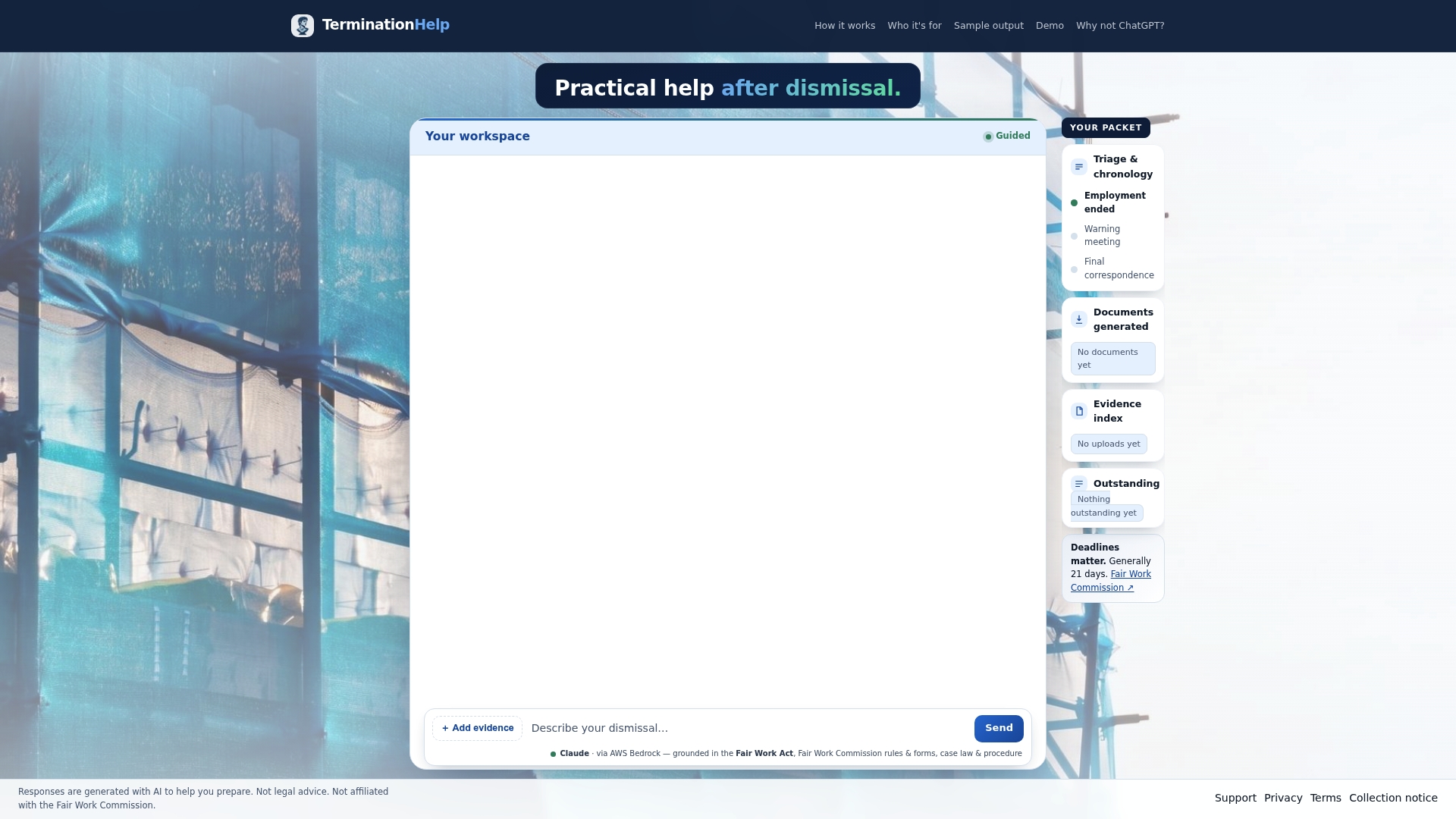
The preparation process is built around Australian Fair Work procedures, reflecting current legislation and Commission practice rather than generic legal content. The output is a structured packet that can be used for lodging independently or shared with a lawyer, union or community legal centre. Start your preparation through our unfair dismissal preparation service before your 21-day window closes.
This article is general information, not a substitute for advice from a qualified lawyer. Consult a qualified legal professional about your own circumstances before acting on anything here.
FAQ
Can I be sacked for whistleblowing?
Not lawfully, if the dismissal was caused by a belief or suspicion that you made a qualifying disclosure under Part 9.4AAA of the Corporations Act. An employer can still dismiss you for genuine, unrelated reasons such as redundancy or documented misconduct, provided those reasons are not linked to the disclosure.
What are the current whistleblower protection rules in Australia?
The Corporations Act's whistleblower regime, expanded by reforms requiring larger entities to hold a whistleblower policy from 1 January 2020, prohibits causing or threatening detriment because of a disclosure. Recent Full Federal Court authority has also clarified the subjective belief and causation test that applies to these claims.
What happens if a whistleblower is dismissed?
The whistleblower can pursue court proceedings for compensation, declarations or injunctions under the Corporations Act, and separately may have Fair Work Commission options such as unfair dismissal or general protections, generally within 21 days. ASIC can also investigate the conduct and pursue penalties, though it cannot order personal compensation.
What qualifies someone as a whistleblower?
A whistleblower under the Corporations Act is typically an employee, officer, contractor or supplier connected to the company who discloses suspected misconduct, a legal contravention or a risk to the public, made through an eligible channel such as ASIC or a nominated company officer. International students and other non-standard workers should also check their specific work rights if dismissal affects visa conditions.
Sources
- Whistleblower rights and protections | ASIC
- Unfair dismissal - Fair Work Ombudsman
- Legislation
- Full Federal Court confirms threshold for whistleblower victimisation claims | Clayton Utz
Key primary sources and regulator pages
- Whistleblower rights and protections | ASIC
- Unfair dismissal - Fair Work Ombudsman
- Treasury Laws Amendment (Enhancing Whistleblower Protections) Act 2019
- Full Federal Court confirms threshold for whistleblower victimisation claims | Clayton Utz
Article produced using AI. This is not legal advice.