

A non-disparagement clause stops one or both parties from making negative public statements about each other, and Australian courts generally enforce clearly worded versions of them. Carve-outs for whistleblowing, legal compulsion and statutory rights can still affect how far a clause reaches. For guidance on specific wording, AustLII case law and the Fair Work Ombudsman are good starting points, and our team can help you organise the evidence and forms if a dispute follows.
TL;DR:
- Truthful criticism can still breach the contract unless the clause expressly permits it; a defamation defense does not automatically answer a contract claim.
- Ask for a mutual clause limited to one to three years, with explicit exceptions for legal orders, regulator cooperation, whistleblowing, and protected workplace rights.
- Courts may order injunctions or damages after a breach, and repeated conduct generally draws stronger relief than one isolated comment, depending on frequency and intent.
- A challenge based on restraint of trade requires evidence that the clause prevents work or causes real economic harm; inconvenience alone is insufficient.
Table of Contents
- How Australian courts interpret and enforce non-disparagement clauses
- Where non-disparagement clauses are used in Australia
- Practical drafting checklist and useful carve-outs for Australian clauses
- When a clause can be legally limited or challenged in Australia
- What remedies a party may seek and short case summaries to illustrate outcomes
- How Fair Work and workplace protections interact with non-disparagement clauses
- Short, adaptable example clause for Australian agreements and drafting notes
- How TerminationHelp supports people facing disputes involving contract terms
- Practical takeaway for employers and employees
- Get organised before your dispute goes further
- FAQ
- Sources
How Australian courts interpret and enforce non-disparagement clauses
Australian courts generally read non-disparagement clauses the way they read any commercial term: by giving the words their plain, business-like meaning rather than searching for loopholes. If a clause says a party must not make negative public comments about the other, a court will usually ask whether the disputed statement falls within that ordinary meaning, not whether the speaker believed it was fair or justified.
That matters because "fair comment" or truth is not an automatic defence to a contract claim. Unless the clause expressly says truthful statements are permitted, a party can still breach it by saying something accurate but negative, according to legal analysis from Clayton Utz. Courts treat the contractual promise as separate from any defamation defence that might apply elsewhere.
Courts will decline to enforce, or will read down, a clause in narrower situations:
- Where enforcing the term would obstruct the administration of justice or stop someone assisting law enforcement, a principle confirmed in NSW Supreme Court case law.
- Where the wording is so vague that it can't be given sensible commercial meaning.
- Where a statutory right, such as a whistleblower protection, overrides the private contract term.
Outside those situations, a clear, specific non-disparagement clause is likely to be upheld.
Where non-disparagement clauses are used in Australia
Non-disparagement clauses turn up across several types of agreements, and each context shapes how strict the wording tends to be.
- Settlement deeds and deeds of release are the most common home for these clauses, usually added when an employment or commercial dispute resolves and both sides want to avoid ongoing public conflict.
- Employment contracts and redundancy agreements often include them at the point of exit, sometimes bundled with confidentiality terms.
- Commercial contracts, including supply, franchise and sponsorship agreements, increasingly carry non-disparagement wording to protect brand reputation.
- Clauses can be mutual, binding both parties equally, or one-sided, binding only the employee or departing party, which is common where the employer wants to protect its public reputation without the same restriction applying to itself.
Timing matters too. Most clauses are negotiated at the point of exit or settlement, though some standard-form employment contracts include a non-disparagement term from day one, well before any dispute arises.
Practical drafting checklist and useful carve-outs for Australian clauses
A clause that is too broad or too vague invites disputes later rather than preventing them. Before signing or drafting one, work through a short checklist.
- Define "disparage" precisely: specify whether it covers written statements, verbal comments, social media posts, or all of these, and whether it applies to statements about the business, individuals, or both.
- Limit the channels and audience: a clause aimed at public statements is different from one that also restricts private conversations with family or a new employer.
- Add express carve-outs for legal compulsion (subpoenas, court orders), cooperation with police or regulators, whistleblowing disclosures and communications protected under the Fair Work Act.
- Set a time limit: an open-ended or perpetual restriction is harder to justify and more likely to attract scrutiny than a clause capped at two or three years.
- State the consequences of breach and the process for resolving a dispute, whether that's negotiation, mediation or court action.
Pro Tip: Ask for a mutual, time-limited clause with named carve-outs rather than accepting a one-sided, open-ended version drafted by the other side.
When a clause can be legally limited or challenged in Australia
Several legal doctrines can cut back how far a non-disparagement clause reaches, even when the wording looks broad on paper.
- Administration of justice exception: a contract term cannot validly stop someone from assisting police, giving evidence, or reporting a crime, a principle drawn from NSW case law on public policy limits to contractual silence.
- Restraint of trade analysis: courts apply what Maddocks describes as a "practical working" test, meaning a challenger must show the clause genuinely prevents them from working or causes real economic harm, not just inconvenience. This is a demanding threshold to meet.
- Statutory protections: adverse action provisions, whistleblower protections and pay secrecy reforms can override conflicting contract terms in specific circumstances.
- Vague or unlimited wording: a clause with no time limit, no defined scope, or language too broad to apply sensibly is more likely to be read down.
If a clause you're asked to sign lacks any carve-outs at all, that's a practical red flag worth raising with a lawyer before you agree to it.
What remedies a party may seek and short case summaries to illustrate outcomes
When a non-disparagement clause is breached, the other party typically has a few options available through the courts.
- Declarations that a breach occurred, often sought alongside other relief.
- Injunctions, temporary or permanent, to stop further disparaging statements.
- Damages to compensate for loss caused by the breach, where it can be shown.
- Costs orders against the breaching party, particularly where the breach was clear and repeated.
Recent New South Wales Supreme Court decisions show courts enforcing plainly worded non-disparagement clauses in settlement deeds and granting remedies where the breaching statements clearly fell within the clause's wording, according to case analysis from Maddocks.
A single, isolated comment is treated differently to a pattern of repeated conduct. Courts weigh frequency and intent when deciding whether an injunction or damages is the appropriate remedy, and repeated breaches tend to attract stronger relief. If your dispute involves a settlement deed, understanding without prejudice privilege can help you protect sensitive settlement discussions along the way, and our guide to unfair dismissal remedies and payout caps covers related compensation limits that often arise in the same dispute.
How Fair Work and workplace protections interact with non-disparagement clauses
A non-disparagement clause operates alongside, not above, statutory workplace rights. Several protections can limit what a contract term can validly restrict.
- The Fair Work Ombudsman does not advise on the terms of individual contracts and recommends independent legal advice for questions about restrictive covenants like these, as stated on its employment contracts guidance page.
- Pay secrecy reforms mean secrecy-type terms in enterprise agreements have had no effect since 7 December 2022, according to Fair Work Ombudsman guidance, so a non-disparagement clause cannot be used to revive a pay secrecy restriction that statute has already removed.
- Whistleblower and protected disclosure carve-outs should be built into the clause itself, since statutory protections for whistleblower dismissals generally override conflicting contract wording.
- Adverse action protections under the Fair Work Act mean a clause cannot be used to penalise someone for exercising a workplace right.
Aligning contract wording with these protections from the start avoids a clause that looks enforceable on paper but collapses the moment a statutory right is raised.
Short, adaptable example clause for Australian agreements and drafting notes
A starting point for a mutual, time-limited clause might read: "Neither party will make, or cause to be made, any public statement that disparages the other party, except where disclosure is required by law, requested by a regulator or law enforcement body, or made in the course of a protected disclosure under applicable whistleblower legislation. This clause applies for two years from the date of this deed."
- Adjust the time limit to suit the dispute, commonly one to three years.
- Name the specific parties or releasees covered, especially in multi-party settlements.
- Always have a lawyer review the final wording before you rely on it, since small changes in scope can significantly change enforceability.
How TerminationHelp supports people facing disputes involving contract terms
When a non-disparagement clause becomes part of a workplace dispute, we help people organise the practical side of their case. Our preparation support is designed to assist with Australian Fair Work law matters by checking eligibility, generating required forms, and organising evidence into a structured packet. We're a preparation tool, not a substitute for legal advice on contract interpretation, so once your documents are in order, a lawyer or union can review the clause wording itself. Our preparation support page explains what's included.

Practical takeaway for employers and employees
Employers should draft narrow, time-limited clauses with clear carve-outs and get them reviewed. Employees should negotiate those carve-outs, keep records, and have any clause checked before signing.
— Nicolas
Get organised before your dispute goes further
We built our preparation support tool to assist people dealing with Fair Work matters, including disputes involving non-disparagement clauses. Instead of facing a stack of forms and deadlines alone, you get a structured path through eligibility checks, document generation, and evidence organisation using a preparation tool.
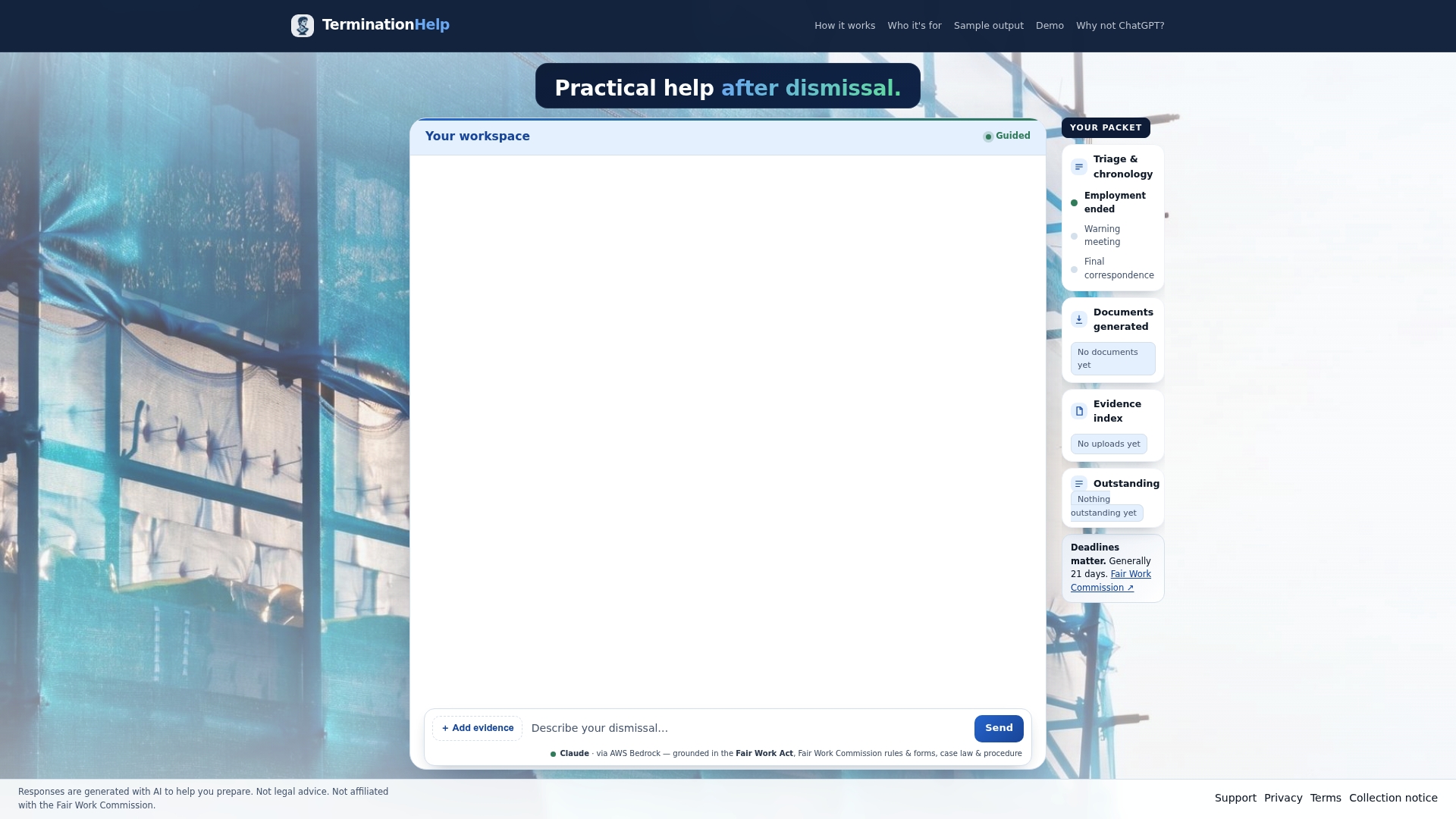
- Eligibility checks confirm whether your situation fits a Fair Work claim before you commit time to paperwork.
- Form generation produces the specific documents your matter needs, aligned to Fair Work Commission requirements.
- Evidence packs organise your settlement deed, correspondence and other records into a clear structure you or your lawyer can act on.
If a dispute over a non-disparagement clause is tangled up with a dismissal or settlement, start with our guide to CCMA settlement agreements in South Africa and get your matter organised before the clock runs out.
FAQ
Can you give me an example of a non-disparagement clause in Australia?
A typical clause states that neither party will make public statements that disparage the other, often with carve-outs for legal compulsion, regulator cooperation and whistleblower disclosures. These clauses commonly appear in settlement deeds and employment exit agreements, with wording tailored to the specific dispute.
How enforceable is a non-disparagement clause?
Australian courts generally enforce clearly worded non-disparagement clauses by giving the terms their plain, business-like meaning, according to legal commentary from Clayton Utz. Enforceability can be limited where the clause is vague, perpetual, or conflicts with a statutory right such as whistleblower protection.
What is an example of a non-disparagement clause?
A short example reads: "Neither party will make public statements that disparage the other, except as required by law or in the course of a protected disclosure." The exact wording varies depending on whether the clause is mutual or one-sided and what carve-outs are included.
Will non-compete clauses be banned in 2027?
This article focuses on non-disparagement clauses, which are a separate contract term to non-compete restraints, and we don't have confirmed information here about non-compete reform timing. For current status on restraint of trade reform, check Fair Work Ombudsman guidance or speak with an employment lawyer.
Sources
- When (lack of) silence is golden – the true impact of non-disparagement clauses — Maddocks
- You can't say that! Testing the boundaries of non-disparagement clauses — Clayton Utz
- NSWSC 2002 decision — AustLII
- Get help with employment contracts — Fair Work Ombudsman
Recommended
- 21 days after a whistleblower dismissal in Australia: case law, steps
- Check Unfair Dismissal Eligibility in Australia: 21 days to lodge
- Australia: $95,050 payout cap and unfair dismissal remedies
- 21 Days to Respond to Serious Misconduct Under Reg 1.07 in Australia
Article produced using AI. This is not legal advice.