

Garden leave is a contractual arrangement in Australia where an employee remains employed and paid during their notice period but is directed not to attend work. Whether it applies to you depends on your employment contract, any award or enterprise agreement, and compliance with the National Employment Standards. If you are unsure, the contract and your award are the first places to look.
TL;DR:
- Check your employment contract, applicable award, and enterprise agreement for authority and process; the Fair Work Act contains no dedicated garden leave rule.
- Garden leave keeps employment alive, so salary, superannuation, benefits, and leave accrual continue; payment in lieu ends employment immediately and stops accrual.
- Before accepting other work during garden leave, check your contract and written direction, because secondary employment depends on the restrictions they set.
- Employers should state dates, pay, contactability, access limits, and handover duties in writing, while ensuring each direction fits the contract and remains reasonable.
- Employees considering an unfair dismissal claim must act within 21 days and preserve the contract and written directions as evidence.
Table of Contents
- What garden leave means and how it typically works
- Is garden leave legal in Australia and how does it interact with the Fair Work Act?
- Garden leave vs payment in lieu of notice: what actually changes
- Common scenarios where employers use garden leave
- Employer obligations and employee rights during garden leave
- What a garden leave clause should include
- How to implement garden leave properly: a step-by-step guide for employers
- How TerminationHelp can support people affected by garden leave
- Best practice pointers for employers and employees
- Get Fair Work preparation support if your notice period turns into a dispute
- FAQ
- Sources
What garden leave means and how it typically works
Garden leave gets its name from the idea that an employee might as well be tending their garden instead of coming into the office. It is a contractual tool, not a government scheme, and employers use it to keep someone away from the workplace while the employment relationship technically continues.
During this period, most arrangements share a few common features:
- The employee keeps receiving their normal salary, superannuation and benefits.
- The employee is usually required to remain contactable during work hours, even though they are not attending the office.
- Access to client accounts, company systems and sensitive files is commonly suspended or restricted.
- Some employers use partial garden leave, where the employee handles a limited handover or alternative duties rather than a complete stand-down.
Because these terms are set by the contract rather than a single statutory formula, two employers in the same industry can run garden leave quite differently.
Is garden leave legal in Australia and how does it interact with the Fair Work Act?
Garden leave is not a term defined or regulated in the Fair Work Act 2009, which means there is no single rulebook dictating how it must be applied. Instead, its legality rests on what the employment contract says, what any applicable award or enterprise agreement permits, and whether the employer still meets its National Employment Standards obligations while the employee remains on the books.
Fair Work guidance confirms employers generally have three options when an employee resigns and the employer does not want them working out their notice: let the notice period run as normal, pay out the notice, or direct the employee to take paid leave, commonly known as garden leave. This third option keeps the person employed, so NES entitlements such as pay, leave accrual and superannuation keep running as if they were still turning up for work.

Fair Work's own library material notes that some finer points, such as whether other forms of leave can be used to cover a notice period, remain unsettled and depend on how courts eventually rule. Case law has also weighed in on the practical limits of garden leave clauses, including scrutiny of whether a direction to stay home was reasonable given the contract's wording and any impact on bonuses or restraints of trade. Where the facts are contested, independent advice is the safer path rather than assuming a standard answer applies.
Garden leave vs payment in lieu of notice: what actually changes
The biggest practical difference between garden leave and payment in lieu of notice (PILON) is when employment actually ends.
- Employment status: garden leave keeps the employment relationship alive through the notice period, while PILON ends employment immediately, on the day the payment is made.
- Entitlements and accrual: under garden leave, annual leave and other accruals keep building because the employee is technically still employed; under PILON, accrual stops the moment employment ends, and the employer instead pays out notice as a lump sum.
- Final pay timing: garden leave spreads pay across the notice period through normal payroll, while PILON delivers a single final payment covering what the employee would have earned.
- Common use cases: employers lean towards garden leave when they want to limit access to clients or systems but still retain some leverage over conduct during notice, and towards PILON when a clean, immediate break is preferable, such as in cases of mistrust.
Getting this wrong, particularly around superannuation contributions or leave payout calculations, is one of the more common sources of underpayment disputes.
Common scenarios where employers use garden leave
Employers reach for garden leave in fairly predictable situations, usually where there is a reason to limit an employee's ongoing influence or access.
- Resignation to a competitor: when an employee with access to client lists, pricing or strategy resigns to join a rival, garden leave removes their day-to-day access while the notice period runs.
- Managing workplace tension: after a dismissal or a difficult exit, keeping the person away from the office can reduce friction for the remaining team.
- Redundancy transitions: some employers use garden leave to manage an orderly handover of responsibilities without the departing employee remaining physically present.
- Protecting restraints of trade: where a contract includes a post-employment restraint, garden leave can effectively extend the period during which a former employee is kept away from competitors or clients, though the two clauses need to be drafted so they work together rather than against each other.
Employer obligations and employee rights during garden leave
Both sides have clear responsibilities once garden leave starts, even though the employee is not physically at work.
Employers are expected to:
- Continue paying full salary, superannuation and contractual benefits for the duration.
- Follow whatever process the award, enterprise agreement or individual contract sets out.
- Avoid directions that are demeaning, punitive or outside what the contract actually authorises.
Employees generally retain the right to be paid and to accrue leave as though they were still attending work, and can reasonably ask questions if a direction seems inconsistent with their contract. Whether secondary employment is allowed during this period depends entirely on what the contract says, so it is worth checking before taking on other work. Public holidays falling during garden leave are typically paid in the same way they would be during normal employment, since the employment relationship has not ended.
Pro Tip: Keep a copy of your contract and any written garden leave direction before you stop attending work, since these documents are often the first thing needed if a dispute arises later.
If garden leave feels unreasonable, for instance if pay stops or duties are added that fall outside the contract, raising it in writing with the employer is a sensible first step before escalating further.
What a garden leave clause should include
A well-drafted clause gives both employer and employee certainty, and reduces the chance of a dispute reaching court. At minimum, it should cover:
- Express authority: clear wording that gives the employer the right to direct garden leave and defines how long it can last.
- Pay and benefits treatment: confirmation that salary, superannuation and benefits continue in full during the period.
- Interaction with other terms: how garden leave interacts with notice periods, PILON options, bonus calculations and any restraint of trade clauses.
- Process requirements: how the direction will be communicated, what happens to company property and system access, confidentiality expectations, and a requirement that any direction be reasonable in the circumstances.
Courts examining disputes, including the Grace Worldwide proceedings against Steve Alves, have looked closely at exactly this kind of wording when deciding whether a garden leave direction was enforceable, particularly where bonus entitlements or restraints were in play. Clauses that are silent on these points leave more room for argument.
How to implement garden leave properly: a step-by-step guide for employers
Getting the process right protects both the business and the departing employee.
- Check the governing documents first: review the employment contract, any applicable award or enterprise agreement, and confirm garden leave is actually permitted.
- Decide between garden leave and PILON: weigh up keeping the person employed but away from work or ending employment immediately with a payout, depending on the situation.
- Issue a clear written direction: set out the start and end dates, pay arrangements, contactability expectations and any restrictions on client or system access.
- Manage the practical handover: disable or limit IT access as appropriate, arrange return of company property, and keep a record of all communications.
- Document the rationale: note why garden leave was chosen, and seek legal advice early if restraints of trade, bonus calculations or a likely dispute are involved.
How TerminationHelp can support people affected by garden leave
If garden leave turns into a dismissal dispute or you are questioning whether your notice period was handled correctly, we built our platform to help you prepare. Our AI-assisted tool runs eligibility checks, organises your evidence and generates the Fair Work forms a claim requires, which matters given the 21-day window for unfair dismissal applications. It also supports casual employees who need to gather the right evidence for their specific circumstances.

Best practice pointers for employers and employees
Employers get the most value from garden leave clauses in senior roles where access to clients or confidential information genuinely matters, but overusing them or applying them punitively invites challenge. Document every decision.
Employees should keep copies of their contract and any correspondence, check what their award actually guarantees, and get preparation support or legal advice before the 21-day clock on an unfair dismissal claim runs out.
— Nicolas
Get Fair Work preparation support if your notice period turns into a dispute
If garden leave has left you questioning your pay, your entitlements or the way your notice period was handled, we can help you turn that uncertainty into a structured case.
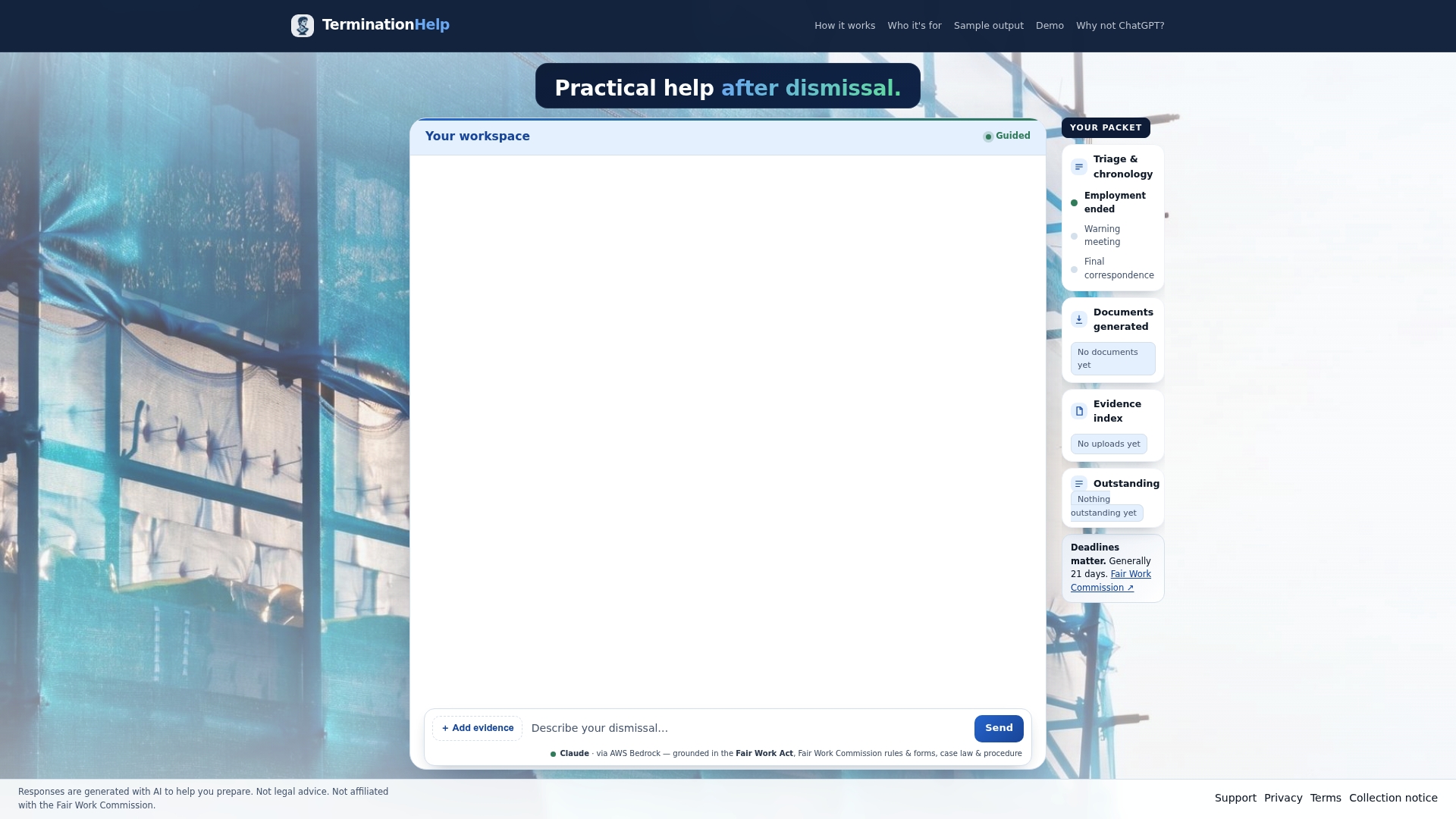
Our preparation support service builds your document pack, generates the required Fair Work forms and keeps you on top of strict filing timeframes, including the 21-day deadline for unfair dismissal claims.
- Eligibility checks tailored to your situation.
- Evidence organisation so nothing gets missed before you file.
- Generated forms and timelines, ready to lodge or hand to a lawyer.
This suits employees facing dismissal, a forced resignation or a dispute over garden leave who need to act quickly. Check your eligibility at TerminationHelp before your window closes.
This article is general information, not a substitute for advice from a qualified lawyer. Consult a qualified legal professional about your own circumstances before acting on anything here.
FAQ
Is gardening leave legal in Australia?
Garden leave itself is not specifically regulated by the Fair Work Act, but it is generally lawful when the contract, award or enterprise agreement authorises it and the employer keeps meeting NES pay and entitlement obligations. Enforceability ultimately depends on the specific wording of the employment contract.
What are the rules around garden leave?
There is no single statutory rulebook, so the rules come from the individual contract, any applicable award or agreement, and general employment law principles such as acting reasonably and in good faith. Employers must keep paying salary, superannuation and other entitlements for as long as employment continues.
Does my employer have to pay me if they put me on garden leave during my notice period?
Yes, because garden leave keeps the employment relationship alive, employees continue to be paid during the notice period as if they had not been given notice at all. This includes ongoing superannuation contributions and leave accrual.
What happens with notice periods after long service?
Notice periods under the NES generally increase with length of service, and an employee's specific entitlement depends on their award, agreement or contract terms. Checking the applicable award or agreement directly is the most reliable way to confirm the exact notice period that applies to a long-serving employee.
Recommended
- Check Unfair Dismissal Eligibility in Australia: 21 days to lodge
- Australia: $95,050 payout cap and unfair dismissal remedies
- Australia FWC Checklist: General Protections Claim, Forms & Causation
- Constructive dismissal in Australia: lodge within 21 days
Article produced using AI. This is not legal advice.